Why Certain Recipes Feel Like Someone Left the Light On for You
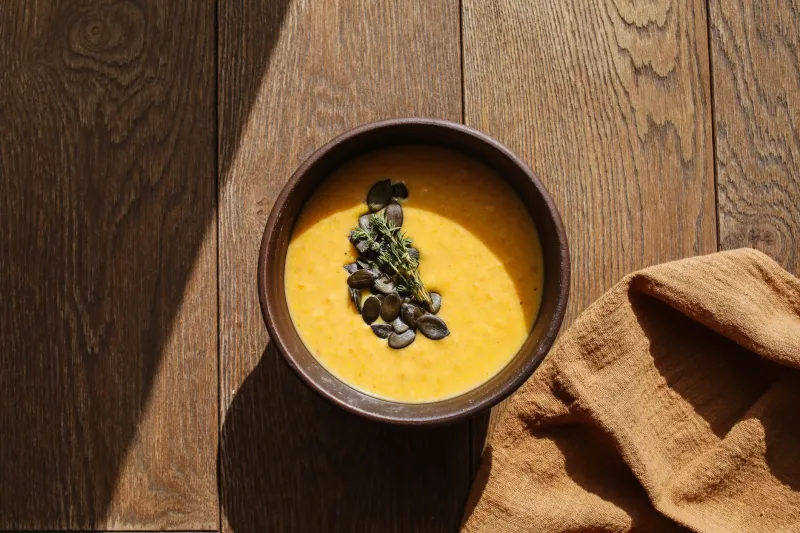
There's a pot of something on the stove — maybe it's a chicken soup that's been simmering since noon, or a skillet of cornbread just starting to brown at the edges — and before you've even tasted a single bite, your shoulders drop about two inches. You exhale. Something in your chest loosens. You didn't know you were holding tension until the smell of that food let it go.
This isn't coincidence. It isn't even entirely about hunger. It's about the extraordinary, deeply human way that certain recipes become more than food. They become coordinates. A place you can return to when the world feels like too much.
The Science Behind the Feeling
Researchers who study the psychology of eating have long noted that comfort food isn't really about the food itself — it's about what the food represents. Our brains form powerful associations between sensory experiences (smell, taste, texture, warmth) and emotional states, particularly during childhood. When you encounter those same sensory cues as an adult, your nervous system responds almost before your conscious mind catches up.
Smell is especially potent here. The olfactory system has a more direct line to the brain's emotional and memory centers than any other sense. Which is why one whiff of something baking — a pie crust, a pan of brownies, even just butter melting in a cast-iron skillet — can send you spiraling back to a kitchen you haven't stood in for twenty years.
But it's not just nostalgia doing the heavy lifting. Comfort foods are often warm, soft, and high in carbohydrates — qualities that genuinely support the release of serotonin and promote a sense of calm. Your body and your memories are working together, conspiring to make you feel held.
The Dishes That Anchor Us
Ask almost anyone about their comfort food and they'll pause before they answer. Not because they don't know — they know immediately — but because the answer carries weight. It's rarely something they ate at a restaurant. It's almost always something someone made for them.
Macaroni and cheese from a grandmother who stirred it by hand. Red beans and rice on a Monday, because that's just what Mondays were. A specific birthday cake that appeared every year without fail, yellow with chocolate frosting, slightly lopsided, perfect. These dishes become anchors not because they're extraordinary in a culinary sense, but because they showed up consistently. They were reliable. They said: you belong here.
That reliability is everything. In a world that shifts constantly, a recipe that stays the same is a small act of radical steadiness. It tells you that some things hold.
Cooking With Intention, Not Just Habit
Here's the part that tends to get overlooked: comfort food doesn't only live in the past. You can make it. Right now, in your own kitchen, for the people sitting at your table — or for yourself.
It starts with paying attention to what actually soothes you. Not what you think should be comforting, not what food media tells you is cozy. What genuinely lands in your body like a slow exhale? For some people it's a bowl of congee. For others it's a grilled cheese with tomato soup. For others still, it's a simple plate of buttered pasta with enough parmesan to be embarrassing. None of these answers are wrong.
Once you know what that dish is, cook it with awareness. Notice what you're doing with your hands. Notice the sound the onions make when they hit the pan, the way the broth changes color as it reduces, the moment the kitchen shifts from smelling like raw ingredients to smelling like dinner. These details matter. They're what transforms a recipe from a set of instructions into a ritual.
And if you're cooking for someone else — a kid who had a hard day, a friend going through something, a partner who just needs to sit down and be fed — that intention doubles in power. Food made with care carries that care in it. People feel it, even if they can't name what they're feeling.
Building New Anchors
One of the most generous things you can do as a home cook is to understand that you are actively creating someone's future comfort food right now. The soup you make every winter. The pancakes you always do on Sunday mornings. The birthday dinner that stays the same year after year because changing it would feel like a betrayal.
You don't need a family recipe passed down through generations to participate in this. You just need to show up, repeatedly, with the same dish and the same care. Repetition is what turns a meal into a memory. Consistency is what makes a recipe feel like home.
This is one of the quieter forms of gratitude in the kitchen — the recognition that what you're making today might be what someone reaches for in their mind decades from now, when they need to feel safe. That's not a small thing. That's a profound thing, dressed up in an apron.
The Grace in the Familiar
There's a reason we call it comfort food and not exciting food or impressive food. Its whole job is to comfort. To ease. To remind you that you've been okay before and you'll be okay again.
In a culture that often celebrates novelty — the new restaurant, the trending ingredient, the recipe no one's tried yet — there's something quietly radical about returning to the familiar. About saying: this dish, these flavors, this smell, this is enough. More than enough. This is exactly right.
So the next time you find yourself reaching for that same recipe — the one you've made a hundred times, the one that doesn't need to be improved — let yourself reach for it without apology. Make it slowly. Make it with gratitude for whoever taught it to you, or for the version of yourself that figured it out. Set the table. Sit down.
Someone left the light on. That someone might be you.