The Five-Recipe Life: How Cooking the Same Dishes Again and Again Sets You Free
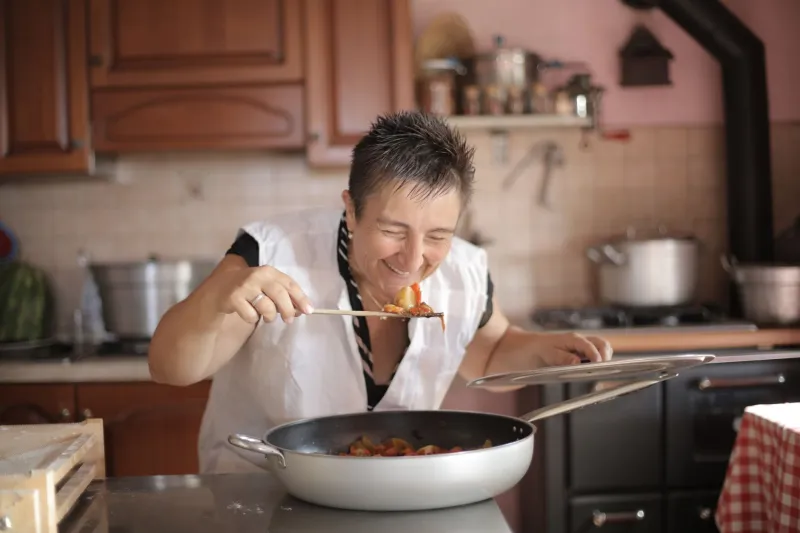
Somewhere along the way, we got the idea that a good home cook is a constantly creative one. That the mark of someone who truly loves food is an ever-expanding recipe archive, a rotation that never repeats, a kitchen always chasing the next interesting thing. Cooking shows, food apps, and social media feeds have quietly convinced us that variety is the point — that eating the same meal twice in a month is a kind of culinary failure.
But talk to the people who actually find deep joy in cooking — not the performance of it, but the real, grounding, everyday act — and a different picture emerges. Many of them cook the same handful of dishes on rotation. They have their five. Maybe six. And they wouldn't trade that rhythm for anything.
The Tyranny of Infinite Options
There's a reason decision fatigue is a real psychological phenomenon, and the dinner hour is one of its most reliable triggers. After a full day of choices — at work, with your kids, in traffic — standing in front of an open refrigerator and asking yourself what should I make tonight? can feel genuinely overwhelming. The blank slate isn't always freeing. Sometimes it's just exhausting.
Research on decision fatigue has shown that the more choices we make throughout the day, the worse our decision-making becomes by evening. It's no coincidence that so many of us default to takeout not because we don't want to cook, but because we simply can't summon the mental energy to figure out what to cook.
A limited repertoire sidesteps that entirely. When Tuesday means pasta night and Sunday means a slow roast chicken, you don't have to decide — you just begin. And beginning is often the hardest part.
What Repetition Actually Teaches You
There's also something quietly profound about making the same dish over and over. You stop following the recipe and start knowing it. You notice when the onions need another minute, when the sauce is thicker than usual, when the dough feels off because the humidity is high. You become, without trying to, genuinely skilled.
Maria, a home cook in Portland, Oregon, has made her grandmother's chicken soup every single week for the past four years. "The first hundred times, I was still consulting notes," she says. "Now I just make it. My hands know what to do. And every time I make it, I feel like I'm getting better at something that actually matters."
That kind of mastery doesn't come from chasing novelty. It comes from the unglamorous, deeply satisfying act of repetition.
The Ritual That Becomes the Memory
Ask most adults about their most vivid food memories and they rarely involve a restaurant meal they had once or a recipe they tried from a magazine. They remember their mom's meatloaf. Their dad's Saturday morning pancakes. The way their grandmother's kitchen smelled every single Sunday. The power wasn't in the uniqueness of the dish — it was in its reliable return.
Repetition is how food becomes ritual, and ritual is how families build identity. When your household has a taco night, a soup Sunday, a birthday cake that's always the same recipe, you're not just feeding people — you're creating a shared language. A shorthand for belonging.
Derek, a father of three in Atlanta, makes his family's Friday pizza from scratch every single week without exception. "My kids are teenagers now and they still ask for it," he says. "It's not fancy. It's just ours. When they leave for college, that's the recipe I'm going to write down and send with them."
That's not a lack of creativity. That's a legacy.
Gratitude Lives in the Familiar
There's something the Food Grace philosophy returns to again and again: gratitude isn't found in the extraordinary. It lives in the ordinary, tended carefully. A perfectly made bowl of oatmeal on a cold morning. A pot of chili that's been simmering since noon. The pasta sauce you've made so many times you could do it in the dark.
When you stop treating every meal as an opportunity to impress — yourself, your family, your Instagram followers — and start treating it as an opportunity to nourish, something shifts. You're no longer cooking at people. You're cooking for them. And for yourself.
There's gratitude in that simplicity. In knowing what you're making. In having enough ingredients on hand because you always have these ingredients. In the way your kitchen smells familiar and welcoming rather than chaotic and stressful.
How to Find Your Five
If the idea of narrowing your cooking life down to a core rotation sounds appealing but a little daunting, here's a gentle way to start:
Look backward, not forward. Instead of searching for new recipes to add, think about the meals your household has loved most over the past year. What did people ask for again? What did you make without consulting a recipe? What felt easy and good?
Anchor each dish to a day or a mood. Not every meal needs a designated night, but having some loose associations — soup when it's cold, tacos on Friday, eggs whenever the week gets hard — gives you a mental framework to reach for.
Allow for seasons. Your five recipes don't have to be static. A summer rotation might look different from a winter one. That's not inconsistency; that's paying attention.
Resist the urge to optimize. Your rotation doesn't need to be nutritionally perfect or impressively diverse. It needs to be yours — dishes that feel good to make and good to eat, that fit your life and your people.
Give yourself permission to be boring. This is, perhaps, the most radical step. In a culture that constantly rewards novelty, choosing the familiar on purpose is a quiet act of resistance. It's also a gift to yourself.
The Freedom at the Bottom of the Pot
Here's the paradox that cooks who live by a small repertoire tend to discover: having fewer recipes doesn't make your cooking life smaller. It makes it deeper. You're not constantly skimming the surface of something new. You're going all the way down into something known.
And at the bottom of that familiar pot — the one you've made a hundred times, the one your family would recognize by smell alone — there's something that looks a lot like grace.
Not the grace of doing something impressive. The grace of showing up, again, to something that matters. Of feeding the people you love with your hands and your time and your whole, undistracted presence.
That's the five-recipe life. And it's more than enough.