Just You and the Stove: Rediscovering Yourself Through the Ritual of Cooking Alone
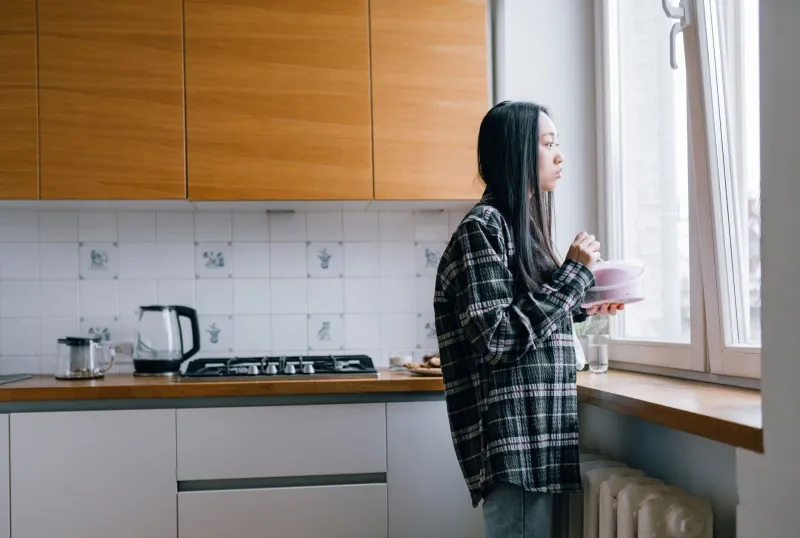
Somewhere along the way, cooking became a performance.
We share recipe videos on Instagram, host dinner parties to impress, batch-cook for the family, and meal prep with productivity in mind. Even our relationship with food has become, in many ways, an audience sport. Which makes it easy to forget that the kitchen can also be the most private room in your house — a place where nobody is watching, nobody is grading the plating, and the only person you're feeding is yourself.
There's a particular kind of grace that lives in that space. And if you haven't spent much time there lately, it might be worth finding your way back.
The Strange Loneliness of Always Cooking For Someone
If you're the designated cook in your household — or even if you're not — you've probably experienced the subtle pressure that comes with preparing food for others. The silent negotiation of dietary preferences. The mental math of timing. The quiet anxiety of wondering whether it'll be good enough, filling enough, appreciated enough.
Cooking for others is an act of love, no question. But love given without rest has a way of running dry.
When was the last time you made something entirely because you wanted it? Not because it would please the table or use up the leftovers or check a nutritional box — but simply because the thought of it made you feel something warm and good? That small, specific hunger is worth paying attention to. It's telling you something about what you need.
What Happens When You Cook Without an Audience
Solo cooking strips the whole experience down to its essentials. There's no one to impress and no deadline beyond your own appetite. What fills that space instead is something a lot of people don't expect: presence.
You start to notice things. The way garlic smells different the moment it hits warm oil. The satisfying resistance of a good knife moving through a dense winter squash. The sound of water coming to a boil — that slow, building rumble that tells you something is about to change. These are sensory details that tend to vanish when you're distracted by conversation or a podcast or the general noise of family life.
Psychologists have long pointed to repetitive, hands-on tasks as a pathway to what's sometimes called a "flow state" — that absorbed, almost meditative quality of attention where time softens and mental chatter quiets. Cooking, with its rhythm of chopping and stirring and tasting, is a natural entry point into that state. But you're more likely to find it when you're alone and genuinely unhurried.
There's also something worth naming about the emotional dimension. Cooking for yourself is, at its core, an act of saying I am worth the effort. In a culture that often equates self-care with spa days and expensive wellness routines, the simple act of making yourself a proper meal — something warm, something considered, something made with care — is quietly radical.
Making It Feel Like a Ritual, Not a Chore
The difference between cooking alone as a chore and cooking alone as a ritual is mostly intention. Here's how to shift the experience:
Clear the kitchen of noise, at least some of the time. We're so conditioned to fill silence that the idea of cooking without a podcast or a TV on in the background feels almost uncomfortable. Try it anyway. Even twenty minutes of cooking in genuine quiet can feel like a reset for your nervous system. If silence feels too stark, try soft instrumental music — something without lyrics that won't pull your attention away from what you're doing.
Choose something you actually want to eat. Not what's practical, not what photographs well, not what uses up the aging produce in the crisper drawer. What do you want right now? Honor that question seriously. Maybe it's a simple bowl of buttered noodles with a little parmesan. Maybe it's a slow-roasted chicken thigh with herbs from the windowsill. The specificity of your own appetite is worth following.
Use the good stuff. This is not the time to save the nice olive oil for company. The beautiful sea salt, the real butter, the dried pasta you bought at that Italian market in the city — use it. You are company. You are, in fact, the only guest who matters tonight.
Move slowly on purpose. Solo cooking doesn't have to be efficient. Let it take longer than it needs to. Taste as you go. Adjust. Wander back to the stove and stir something just because it feels good to stir it. The unhurried quality of the experience is part of what makes it nourishing.
The Meal You Make for No One Else
There's a particular kind of meal that only exists in the solo kitchen. It's usually simple. It's often a little odd — the combination of things you'd never serve to guests but that somehow makes perfect sense to you. It might be eaten standing at the counter, or cross-legged on the couch, or out on the back porch with a glass of something cold.
This meal doesn't need a name or a recipe. It just needs to be yours.
I think about a friend who lives alone and has made a weekly ritual of Saturday lunch for one. She puts on a record, pours herself a small glass of wine before noon (which she says feels delightfully indulgent), and makes herself something she's been thinking about all week. Sometimes it's elaborate. Sometimes it's just a very good grilled cheese. But she treats the whole hour as sacred — no phone, no laptop, no multitasking. Just her and the kitchen and the particular pleasure of feeding herself well.
She told me once that it's the part of her week she guards most fiercely. "It reminds me that I know how to take care of myself," she said. "And sometimes I forget that."
A Different Kind of Gratitude
Food Grace has always been rooted in the idea that gratitude can live in the kitchen — in the act of cooking, in the way we receive a meal, in the attention we bring to what we eat. Most of the time, we think about that gratitude in the context of sharing: the generous table, the communal pot, the meal that brings people together.
But there's another kind of gratitude worth practicing. The kind that's quieter and more interior. The kind that says thank you for this hour alone, for this particular hunger, for the ability to answer it with something made by my own hands.
The solo kitchen, at its best, is a place where you remember that nourishing yourself is not an afterthought. It's the whole point.
So the next time the house is empty or the evening is yours alone, resist the urge to order in or stand over the sink with crackers. Light a burner. Get out a pan. Make yourself something real.
You're worth the doing of it.