Before the Recipe Is Gone: How to Capture the Food Stories That Hold Your Family Together
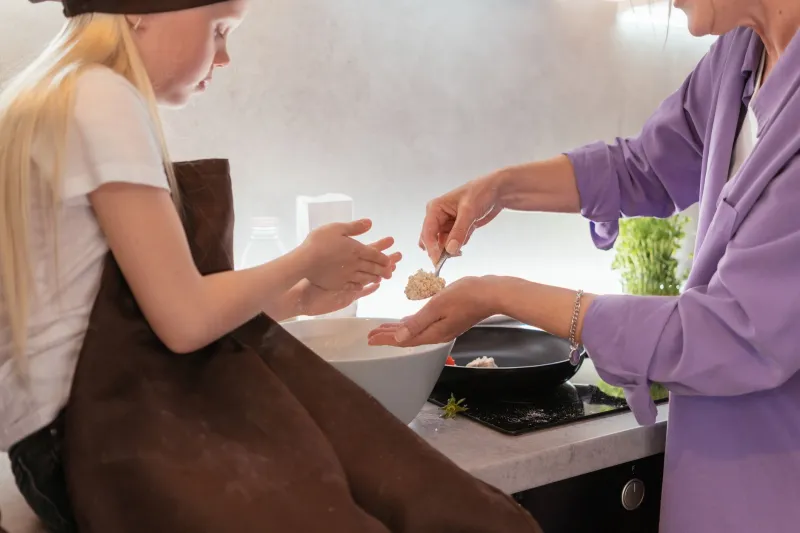
There's a dish your family makes. Maybe it shows up every Thanksgiving, or every Sunday, or only when someone really needs comforting. You've eaten it a hundred times. You know what it tastes like, what it smells like when it hits the pan, what it means when it appears on the table.
But do you know how to make it?
Not from a recipe card. Not from a cooking show. From the person who actually makes it — the one who eyeballs the seasoning, who knows when the dough feels right, who learned it from someone who learned it from someone else, all the way back to a kitchen you'll never see.
That knowledge is fragile. And most of us don't realize it until it's already gone.
The Recipes That Never Got Written Down
There's a quiet crisis happening in American kitchens. As older generations age, a vast archive of culinary knowledge — techniques, proportions, regional traditions, family variations — is disappearing without anyone meaning for it to. Not because anyone was careless, but because the people who hold this knowledge often don't think of themselves as holding anything special. They're just cooking the way they always have.
Your grandmother doesn't think her biscuit method is remarkable. Your dad doesn't realize his way of seasoning cast iron is something you'll search for someday. Your great-aunt assumes someone else in the family already knows how to make that cake.
Sometimes nobody does.
This is where the idea of a gratitude recipe box comes in — not just as a keepsake, but as an act of intention. A way of saying: this matters, and I want to remember it.
What a Gratitude Recipe Box Actually Is
Think of it less like a recipe binder and more like a living archive. It can be physical — a wooden box, a vintage tin, a simple accordion folder — or digital, stored in a shared Google Doc or a private blog. The format matters less than the commitment to filling it.
What goes inside isn't just ingredients and instructions. It's context. It's story. It's the why behind the what.
A gratitude recipe box might include:
- A handwritten card with a recipe in your aunt's actual handwriting, imperfect spelling and all
- A voice memo of your dad explaining how he knows when the onions are ready
- A photo of your mom's hands shaping dumplings
- A note about where the recipe came from — the town, the occasion, the person who first made it
- Your own memory of eating it for the first time, or the hundredth time
When you put all of that together, you're not just preserving a recipe. You're preserving a person.
How to Start the Conversation
Asking a family member to share a recipe can feel awkward if it comes out of nowhere. The best approach is usually to cook alongside them rather than interview them cold.
Offer to help. Show up in the kitchen. Ask questions while you're both doing something with your hands — that's when people talk most honestly. Why do you add that at the end? Where did you learn to do it that way? Did your mom make it like this too?
If you can't be there in person, a video call works. Ask them to walk you through it while they cook, and record it with their permission. You don't need a fancy setup. A phone propped against a coffee mug will do.
Some questions worth asking:
- What's the dish you're most proud of? Not the fanciest — the one that feels most like you.
- Is there anything you make that you've never seen a recipe for anywhere else?
- Who taught you, and do you remember learning it?
- What would you want me to know about making this that I wouldn't figure out on my own?
That last question tends to unlock something. It's where the real knowledge lives.
Translating 'A Handful' Into Something You Can Actually Use
One of the great challenges of documenting family recipes is that experienced cooks rarely measure anything. A handful of this, cook it until it looks right, season to taste — these instructions are completely accurate and almost completely useless if you've never made the dish before.
When you're cooking alongside someone, bring measuring cups and spoons — not to be annoying, but to quietly observe. Watch how much they use and write it down afterward. Better yet, ask them to measure just once, just for you, just so you have a starting point. Most people are willing to do this if you frame it as a gift to yourself rather than a critique of their method.
Also pay attention to the sensory cues they use — the color, the smell, the sound of something sizzling. Those are the real instructions. Write those down too.
When the Person Is No Longer Here
Sometimes we realize too late. The person who made the dish is gone, and all we have is a memory of the taste and a hollow feeling every holiday when that dish isn't on the table.
This doesn't mean the recipe is lost forever. It means the work of recovering it looks different.
Talk to other family members who might have watched or helped. Search for regional or cultural recipes that might be close to what you remember. Try to recreate it from taste memory, adjusting batch by batch. And when you find something that comes close, write it down — including the story of how you searched for it. That story is part of the recipe now.
There's something deeply meaningful about the act of reconstruction. It's a way of honoring someone through effort, through paying attention, through refusing to let what they made disappear entirely.
Making It a Ritual, Not a Project
The gratitude recipe box works best when it's ongoing rather than finished. Add to it when you visit family. Record something new after a holiday meal. Pull it out and read through it when you miss someone.
Share it, too. Make copies for cousins. Pass it to the next generation. Let it grow messier and richer over time, full of different handwriting and different voices.
Food has always been one of the primary ways human beings say I love you and I remember you and you are still here with me. The gratitude recipe box is just a way of making that intention visible — of treating the food stories in your family as the heirlooms they actually are.
Start with one recipe. One person. One conversation.
That's enough to begin.