Every Imperfect Batch Is a Conversation: Cooking the Recipes She Left Behind
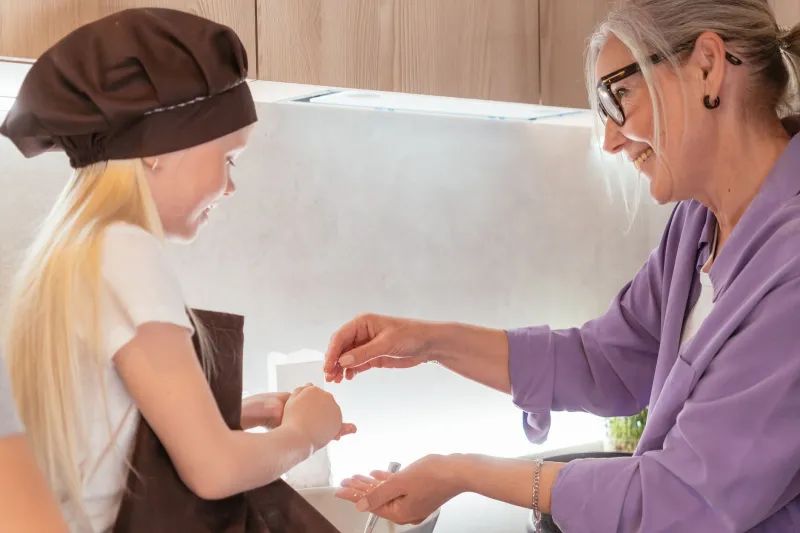
The card is soft at the edges. The ink has bled a little where something — butter, maybe, or tears from a laughing fit — once landed and dried. The measurements are written in a handwriting you'd recognize anywhere, even now, even years later. A handful of this. Cook until it smells right. Instructions that assume you already know things you're not sure you do.
This is what inherited cooking looks like. Incomplete. Intimate. Irreplaceable.
For a lot of us, the kitchen is where we feel the absence of someone most acutely. And it's also, paradoxically, where we feel closest to them again.
The Recipe Isn't Really About the Recipe
Let's be honest: when you decide to make your grandmother's sweet potato pie or your late uncle's red beans and rice, you're not really doing it because you need dinner. You're doing it because something in you needs them. The food is the vehicle. The ritual is the point.
Food anthropologists have long noted that recipes function as cultural memory — they carry not just ingredients and technique, but the emotional architecture of a family. The way a dish is seasoned tells you something about where a family came from. The shortcuts someone took tell you about how they lived. The handwritten note in the margin — Daddy likes extra pepper — tells you about who they loved.
When you recreate those dishes, you're not just feeding yourself. You're participating in something much older and much larger than one meal.
Why It Never Tastes Exactly the Same (And Why That's Okay)
Here's the thing nobody warns you about: it probably won't taste like you remember. Maybe not even close.
There are practical reasons for this. Your grandmother may have used lard where you use butter. Her cast iron skillet was seasoned over forty years; yours is seasoned over four. The tomatoes she grew in her backyard in rural Georgia have a different sweetness than the ones you picked up at the farmers market in Portland. These aren't failures. They're just the honest truth about how food lives in time and place.
But there's something else at play, too. Memory has a way of gilding everything it touches. The biscuits you remember from childhood were almost certainly enhanced by the warmth of the kitchen, by the feeling of being small and safe, by the specific magic of watching someone who loved you do something effortless. You can't replicate that in your own kitchen at 38. You're a different person eating under different circumstances.
And yet — and this matters — you can make something real and good and yours. Something that carries the echo of the original even if it doesn't hit the same exact note.
The Kitchen as a Place of Dialogue
There's a concept in spiritual practice sometimes called continuing bonds — the idea that our relationships with people who have died don't simply end, but evolve into something different. We carry them. We talk to them in our heads. We make choices we think they'd approve of, or choices we know they'd argue with.
Cooking their recipes is one of the most tangible ways we engage in that ongoing conversation.
When you're standing at the stove, trying to figure out what medium heat meant to someone who cooked on a gas range in 1967, you're problem-solving in partnership with a ghost. When you taste the sauce and think, she would have added more vinegar here, you're channeling something. When the dish turns out a little flat and you think, I wish I could call her and ask what I'm missing — that's grief, yes, but it's also love in motion.
The kitchen becomes a place where the past and present sit down together. Where you can say, without words, I remember you. I'm still here. I'm still trying.
Giving Yourself Permission to Get It Wrong
One of the quietest forms of self-compassion is allowing yourself to make a beloved recipe badly — and make it again anyway.
The first time you attempt your grandmother's tamales without her standing next to you, correcting the masa spread, it might be a mess. The dough might be too thick. The filling might leak. They might come out gummy in the middle. That's not a sign you've dishonored her memory. That's just the beginning of the learning curve.
Every cook who has ever carried a family tradition forward has gone through this. There's no shortcut past the failed batches. The failed batches are the practice.
What matters is that you show up to try. That you treat the recipe with reverence, even when you're improvising. That you taste as you go and stay curious. That you don't give up after the first imperfect attempt.
She probably didn't get it right the first time either. Nobody starts out knowing.
Small Ways to Honor the Recipes You've Inherited
If you have family recipes — written down, half-remembered, or passed along verbally — here are a few ways to hold them with intention:
Write down what you know, even if it's incomplete. A recipe that says cook until it smells right is still worth preserving. Add your own notes. Date it. Let it become a living document.
Cook it with someone who might remember more. If there's an older relative still around, invite them into the kitchen. Don't just ask them to explain — ask them to cook it with you. Watch their hands.
Let yourself feel what comes up. Grief and joy tend to arrive together in these moments. Don't rush past either one.
Make it your own, slowly. Over time, your version of the recipe will develop its own character. That's not betrayal — that's how traditions stay alive. Your grandmother's recipe was probably her version of her mother's recipe, adapted for her own kitchen, her own family, her own era.
Eat it with gratitude, not comparison. Instead of focusing on what's missing or different, try to notice what's present. The warmth. The effort. The love you brought to the making of it.
The Gift That Keeps Getting Made
There's something quietly radical about cooking a dead person's recipe in a world that's always chasing the new thing. It's a refusal to let certain kinds of beauty disappear. It's a declaration that some things are worth the trouble of remembering.
Your grandmother didn't write down that recipe so it could sit untouched in a drawer. She wrote it — or she didn't write it but carried it in her body — so that something of her could travel forward. So that the people who came after her would know what she knew: that feeding someone is one of the most direct expressions of love available to us.
Every time you make her dish, even imperfectly, even with the wrong pan or the wrong tomatoes or a technique that's slightly off, you're answering that gift. You're saying: I received this. I'm passing it on.
That's not a small thing. In the long, quiet language of the kitchen, that's everything.