The Generous Table: Feeding a Crowd with Heart (and a Tight Budget)
Somewhere along the way, hosting a dinner became a performance. There are the elaborate charcuterie boards with seventeen components, the restaurant-style plating, the Pinterest-worthy tablescapes. And underneath all of it, often, is a host who's quietly panicking about the credit card bill, the timing of three dishes cooking simultaneously, and whether the guests are impressed enough.
This is not the version of hospitality worth chasing.
The gatherings people actually remember — the ones they talk about years later — tend to involve something much simpler: good company, real food, and a host who wasn't too stressed to actually be present. You don't need an occasion or a budget that stretches. You need a table and the willingness to set it.
Rethinking What "Impressive" Actually Means
American dinner party culture has a complicated relationship with money. There's an unspoken equation that says expensive equals effort equals care. But anyone who's ever sat at a table where someone made a big pot of chili from scratch and genuinely meant it knows that equation is wrong.
Impressive, in the context of food, really means: this person thought about me. It means the meal was made with intention. A slow-roasted chicken that spent three hours in the oven is more impressive than an expensive appetizer that came from a specialty store, because it required time and care — two things money can't actually buy.
Shifting this mindset is the first step toward hosting without financial stress. When you stop trying to replicate a restaurant experience in your home and start leaning into what home cooking actually does best — warmth, generosity, flavor that builds over time — everything gets easier.
The Honest Budget Dinner Party: A Real Strategy
Let's get practical. Feeding six to eight people a genuinely satisfying meal can absolutely happen for $40 to $60 if you're strategic. Here's how the math tends to work in your favor:
Build around a low-cost anchor. Dried beans, lentils, whole grains, eggs, and bone-in chicken pieces are some of the most affordable proteins and bases in the American grocery store. A big pot of white bean and vegetable soup with a good parmesan rind simmered in it costs almost nothing and feeds a crowd beautifully. A shakshuka — eggs poached in spiced tomato sauce — is both dramatic-looking and inexpensive. A braised chicken with olives and preserved lemon over rice is the kind of thing that makes people ask for the recipe.
One big dish, done well, beats five mediocre ones. Resist the temptation to offer a sprawling spread. A single impressive main with two thoughtful sides — a bright salad, a simple roasted vegetable — is more satisfying than a table cluttered with things that don't quite come together. It's also significantly cheaper.
Bread is your best friend. A good loaf of crusty bread from a local bakery (or homemade, if you're inclined) signals abundance at the table in a way that few things do. It's filling, it's communal, it invites people to slow down and share. And it costs three to four dollars.
Potluck isn't a cop-out — it's a community practice. Asking guests to bring something is not a failure of hosting. It's an invitation to participate. Ask someone to bring wine or a simple dessert. Let another person bring a salad. This isn't about offloading responsibility; it's about making the meal a collective act of care, which is exactly what a gathering should be.
The Gratitude Gathering: A Different Kind of Occasion
Some of the most meaningful meals don't happen on holidays or birthdays. They happen on a random Sunday when someone texts a few friends and says, "I'm making soup. Come over if you want."
There's a version of hosting that's rooted not in impressing but in connecting — where the goal isn't a flawless dinner party but a real evening where people feel fed and seen. This kind of gathering doesn't require advance planning or a formal menu. It requires a generous spirit and enough food to go around.
One approach worth trying: the "clean out the fridge" dinner. Invite a few people over and cook from what you have — whatever vegetables need using, whatever protein is in the freezer, whatever grains are in the pantry. Make it communal. Let people chop things at the counter. Pour something to drink. The meal that emerges is always better than expected, and the act of making it together becomes the evening.
This is the kind of gathering that builds actual community. Not a polished event, but a real one.
A Few Practical Notes on the Logistics
Cook ahead whenever possible. Dishes like braises, stews, baked pastas, and grain salads are better made a day in advance. They free you from the kitchen when guests arrive and often taste better for the extra time. The host who is actually at the table, relaxed and engaged, creates a better experience than the host who disappears into the kitchen for half the evening.
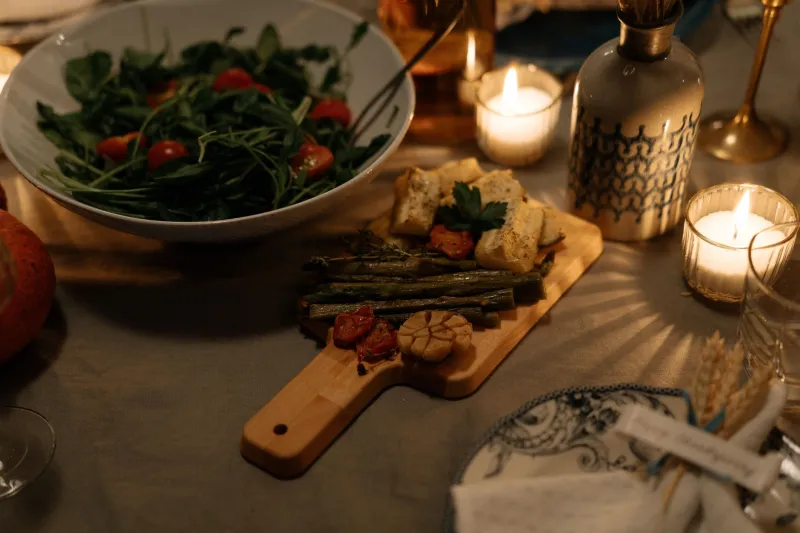
Set the table before people arrive. This sounds obvious, but it matters. A set table — even a simple one with mismatched dishes and a few candles — signals that you prepared for people. It says: you were expected, you are welcome here. That message costs almost nothing.
Don't apologize for the food. This is a common host habit and it undermines the whole experience. If the soup is simple, let it be simple. If the dessert is just good vanilla ice cream with a drizzle of honey, serve it with confidence. Apologizing for what you made teaches your guests to evaluate it critically rather than just enjoy it.
The Real Point of the Table
Food has always been the medium through which humans say: I see you, I care about you, come be with me for a while. That doesn't require a big budget or a complicated menu. It requires showing up — actually showing up, not performing a version of hospitality you saw on a cooking show.
The generous table isn't the most expensive one. It's the one where people feel genuinely welcomed, where the food is made with care, and where the host is present enough to notice when someone's glass is empty or when a guest needs to be drawn into the conversation.
That's the meal worth making. And it's always within reach.