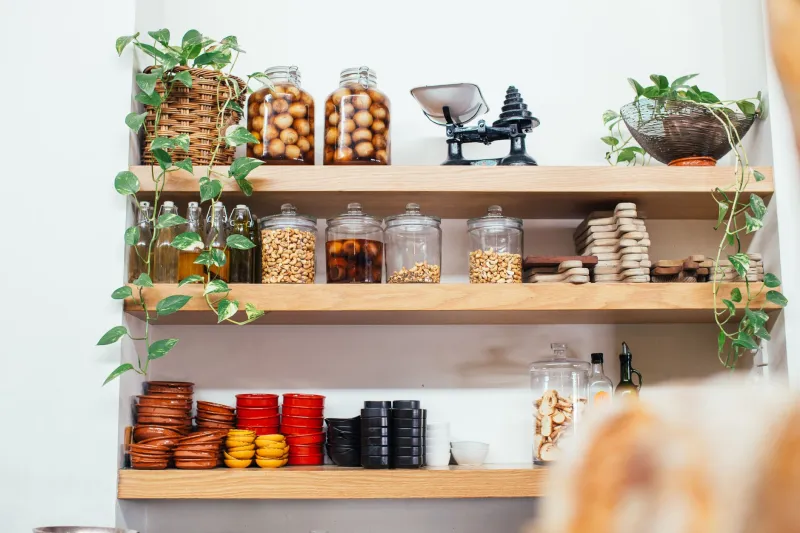
Let me tell you about a Sunday afternoon that changed how I think about cooking.
I had every intention of making a classic chicken piccata — capers, lemon, white wine, the whole deal. I had the chicken. I had the lemon. But the capers were gone, the wine was a distant memory, and the butter I needed was down to a sad, scraping-the-wrapper situation. A few years ago, I would have either driven to the store or abandoned the plan entirely and ordered pizza.
Instead, I looked at what I actually had: green olives, a splash of apple cider vinegar, some olive oil, and a handful of fresh parsley. I made something different. Something entirely mine. And honestly? It was better.
That's the thing about pantry flexibility that nobody talks about enough: it doesn't just solve a logistical problem. It changes your relationship with food.
The Tyranny of the Exact Recipe
Recipes are wonderful. They teach technique, introduce us to new flavor combinations, and give nervous cooks a roadmap when they need one. But somewhere along the way, many of us started treating them like legal documents — as though swapping dried thyme for fresh, or using Greek yogurt instead of sour cream, constituted some kind of culinary crime.
This rigidity creates real anxiety. A 2023 survey by the American Psychological Association found that daily stress around meals and food decisions is surprisingly common among US adults — and while the study focused broadly on food choices, anyone who's stood in a grocery store aisle for ten minutes trying to decide if the dish will be ruined without a specific brand of coconut milk will recognize the feeling.
We've outsourced our confidence to ingredient lists. And it's making us worse cooks, not better ones.
Substitution as a Form of Gratitude
Here's a reframe worth sitting with: when you look at your pantry and ask what can I make with this? instead of what am I missing? — that's gratitude in action.
It's a subtle shift in perspective, but it's profound. You're no longer seeing your kitchen as lacking. You're seeing it as abundant with possibility. That can of chickpeas isn't a consolation prize because you ran out of chicken. It's a protein with a rich history, a satisfying texture, and about a hundred delicious uses.
Tamara, a home cook in Minneapolis, Minnesota, started what she calls "pantry Fridays" — one night a week where she cooks exclusively from what she already has, no grocery run allowed. "At first it felt like a game. Now it feels like the most honest cooking I do all week. I'm not performing a recipe. I'm actually cooking."
That honesty is something worth cultivating. It connects us to generations of cooks — grandmothers, immigrants, sharecroppers, working parents — who never had the luxury of a perfectly stocked pantry and made extraordinary food anyway. Their resourcefulness wasn't a limitation. It was a form of love.
Practical Swaps That Actually Work
If you're new to improvising, a few reliable substitutions can build your confidence fast:
No buttermilk? Mix a tablespoon of white vinegar or lemon juice into a cup of regular milk and let it sit for five minutes. Works beautifully in pancakes, muffins, and quick breads.
Out of fresh garlic? Garlic powder won't offend anyone in a soup, stew, or marinade. Use about a quarter teaspoon per clove.
Missing an herb? In most cooked dishes, dried herbs can replace fresh at a 1:3 ratio. And in a pinch, one fresh herb can often stand in for another — parsley for cilantro, thyme for rosemary, basil for tarragon.
No stock? Water with a splash of soy sauce or miso paste adds depth to grains, soups, and braises in a way that surprises people every time.
Ran out of eggs for baking? A flax egg (one tablespoon ground flaxseed plus three tablespoons water, rested for five minutes) works in most quick breads and cookies.
None of these swaps are secrets. They're just permission — permission to trust yourself in the kitchen more than you currently do.
When Limitations Spark Creativity
There's a concept in creative writing called the "generative constraint" — the idea that boundaries actually produce more interesting work than total freedom. The same principle applies beautifully in the kitchen.
When you have every possible ingredient at your disposal, the options are overwhelming. When you have six things and need to make dinner, your brain gets focused. Resourceful. Playful, even.
Jordan, a home cook in Austin, Texas, describes it this way: "Some of my best meals have come from the weird in-between days before a grocery run. I made a roasted vegetable frittata once with half a zucchini, some leftover roasted sweet potato, and a block of feta that needed using. My roommate still asks for it. I've never been able to recreate it exactly — and somehow that makes it better."
That irreproducibility is part of the magic. It's a meal that existed once, born from what was on hand, from a moment in time. That's not a failure of planning. That's cooking with soul.
Reducing Waste, Reducing Guilt
There's an environmental and emotional dimension to pantry flexibility that deserves acknowledgment. The USDA estimates that Americans waste between 30 and 40 percent of the food supply — a staggering number that lands heavily in home kitchens, in the form of wilted produce, expired cans, and ingredients bought for one recipe and never touched again.
When we commit to cooking with what we have, we waste less. And wasting less food is, at its heart, a form of gratitude. It's honoring the labor that grew the food, the energy that transported it, and the money we spent to bring it home.
Learning to use the whole bunch of cilantro, or actually cooking those lentils that have been in the back of the cabinet since last spring, isn't just practical. It's an act of respect.
Trust Yourself More Than the List
Recipes will always have a place in a mindful kitchen. But the home cooks who seem to find the most joy — the ones who cook with ease and genuine pleasure — are rarely the ones who follow instructions to the letter. They're the ones who have learned to trust their instincts, to taste as they go, and to meet their pantry with curiosity rather than frustration.
You already know more about cooking than you think you do. The flavors you love, the textures that comfort you, the combinations that feel right — that knowledge lives in you, built from every meal you've ever eaten.
The recipe is a suggestion. The pantry is your canvas. And dinner, however imperfect and improvised, is already a gift.