The World on Your Table: How One Weekly Global Meal Became a Family's Most Meaningful Tradition
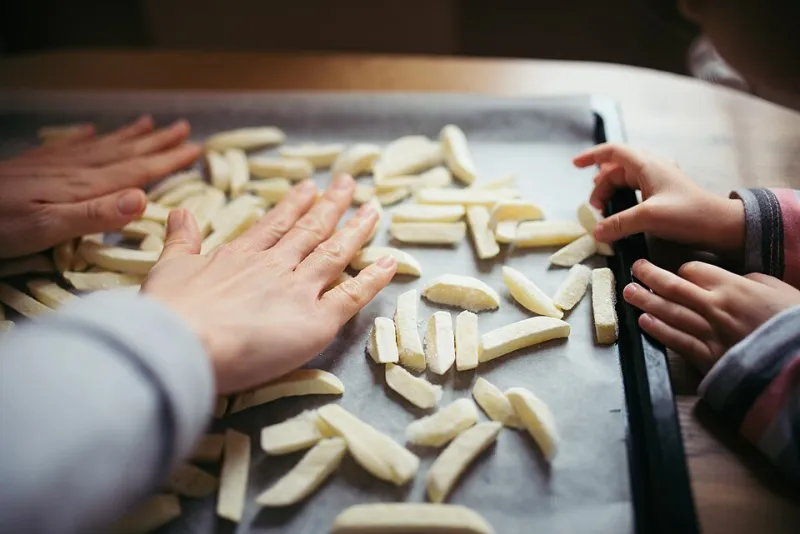
Photo: Shixart1985, CC BY 2.0, via Wikimedia Commons
It started, like most good things, without a grand plan.
Nadia, a home cook and mom of two in Minneapolis, pulled a cookbook off the shelf on a rainy Friday in January — one she'd received as a gift and never really opened. It was a collection of Moroccan recipes. She didn't have all the ingredients, she'd never worked with preserved lemons before, and her kids were skeptical. But they made a simple chicken tagine together, ate it on the couch with the good plates, and talked about Morocco for an hour.
"That was eighteen months ago," she told us. "We've cooked food from thirty-two countries since then. My daughter knows what harissa is. My son can tell you the difference between pho and ramen. But more than that — they ask questions now. About people, about places, about why food matters so much to every culture on earth. That's the part I didn't expect."
This is a story about food, yes. But it's really a story about what happens when curiosity sits down at the dinner table.
Why Food Is the Most Generous Entry Point
There are a lot of ways to learn about a culture. You can read about it, watch documentaries, travel if you're lucky enough. But cooking is different. Cooking asks something of you. It asks you to slow down, follow someone else's logic, work with unfamiliar flavors, and trust a process that didn't originate in your own kitchen.
That act of trusting — of saying I don't know how to do this, but I'm going to try — is, at its core, a form of respect. And when it's done with genuine curiosity rather than appropriation, it opens something up in us.
Food anthropologists have long noted that sharing a meal is one of the oldest and most universal human rituals. Every culture on earth has developed its own food traditions, and those traditions carry within them centuries of wisdom about community, seasonality, resourcefulness, and care. When we cook from another culture's tradition, even imperfectly, we're touching that wisdom. We're saying: what you know matters, and I want to learn from it.
For families especially, this kind of weekly practice creates something rare in busy American life — a recurring moment of genuine wonder.
A Simple Framework for Choosing Where to Start
If the idea of cooking globally feels overwhelming, start small and let curiosity lead. Here's a framework that's worked for a lot of families.
Start with what you already love. Do you always order Thai food for takeout? Start there. Cooking something familiar in your own kitchen gives you a reference point and builds confidence before you venture further out.
Let the kids (or your partner, or your roommate) pick. When the choice belongs to someone else, the investment goes up. A twelve-year-old who chose Japan as the destination is going to be a lot more engaged in making miso soup than one who was just told what's for dinner.
Use one anchor ingredient to guide you. Pick a single unfamiliar ingredient — miso paste, tamarind, sumac, fish sauce — and build a meal around learning what it does. This keeps things manageable and makes the learning feel tangible.
Rotate between regions. A rough rhythm of Asia, the Middle East, Latin America, Africa, and Europe keeps things varied and prevents you from defaulting to the same three cuisines over and over.
Give yourself permission to adapt. You don't need to be a purist. If a recipe calls for an ingredient you can't find at your local grocery store, find a reasonable substitute and make a note of it. The goal is engagement and gratitude, not perfection.
Voices from the Kitchen
We reached out to home cooks across the country who've adopted some version of this practice, and the stories they shared were quietly moving.
Derek, a high school teacher in Atlanta, started cooking Ethiopian food after one of his students brought in injera for a class potluck. "I realized I'd lived forty-three years and never once made injera or even thought about Ethiopian cuisine beyond the one restaurant downtown. I went home and looked up a recipe. It took three tries to get the fermentation right. But now it's one of my favorite things to make — and I think about my student every single time I make it. There's gratitude in that. Real gratitude."
For Lisa and her husband in Denver, the practice became a way to honor her husband's Filipino heritage that they'd let slip in the busyness of daily life. "His lola used to make kare-kare for every big family gathering. We started making it on Sunday nights and calling his mom while we cooked. She'd walk us through it over FaceTime. It became this beautiful thread back to something we almost lost."
These aren't just cooking stories. They're stories about connection — to people, to places, to the parts of ourselves that need to stay curious.
Three Accessible Recipes to Begin Your Journey
We picked three recipes that are genuinely approachable for a weeknight cook, each from a different culinary tradition. None of them require specialty equipment or a long list of hard-to-find ingredients.
Japanese Miso Soup with Tofu and Green Onions
This is one of the most meditative things you can make. The process is simple, the ingredient list is short, and the result is deeply comforting.
Bring four cups of water to a gentle simmer. Add a small piece of dried kombu (available at most Asian grocery stores or online) and let it steep for five minutes, then remove it. Add a handful of bonito flakes, simmer for two minutes, then strain. You've just made dashi — a beautiful, lightly savory broth that's the backbone of Japanese cooking. Dissolve three tablespoons of white miso into the warm dashi, add cubed silken tofu and sliced green onions, and heat gently without boiling. Serve immediately in small bowls. Simple. Profound.
Moroccan Spiced Lentil Soup (Harira-Inspired)
This is the kind of soup that makes you feel taken care of. Heat olive oil in a large pot and sauté one diced onion with two cloves of garlic until soft. Add a teaspoon each of cumin, coriander, turmeric, and cinnamon, along with a pinch of cayenne. Stir for a minute until fragrant. Add one cup of red lentils, one can of diced tomatoes, four cups of vegetable broth, and a handful of fresh cilantro. Simmer for twenty-five minutes until the lentils are completely soft. Finish with a squeeze of lemon and adjust seasoning. Serve with warm pita or crusty bread.
Guatemalan Black Beans with Rice and Pickled Cabbage
Black beans in Guatemalan cooking are slow-cooked and deeply seasoned — nothing like the canned beans you might be used to. For a weeknight shortcut that still captures the spirit: heat a tablespoon of oil in a saucepan, add half an onion (diced) and two cloves of garlic, and cook until golden. Add two cans of black beans with their liquid, a pinch of cumin, a bay leaf, and salt to taste. Simmer for fifteen minutes until the liquid thickens slightly. Meanwhile, toss thinly sliced cabbage with lime juice, a pinch of salt, and a dash of apple cider vinegar and let it sit for ten minutes. Serve the beans over white rice, topped with the quick-pickled cabbage and a squeeze of lime. It's humble, satisfying, and full of flavor.
The Table as Sacred Space
There's a reason we named this site Food Grace. Grace, in its many forms, is what happens when we bring attention and gratitude to the act of eating. And one of the most powerful ways to cultivate that grace is to remember that the food on your plate has a story — often a story that stretches across oceans and generations.
When you cook from another culture's tradition, you're not just making dinner. You're acknowledging that there are ways of knowing the world that are different from your own, and that those ways deserve your respect and curiosity. That acknowledgment — quiet, delicious, practiced weekly around a kitchen table — is one of the most genuine forms of gratitude we know.
Nadia's family has a rule now: after every Friday meal, they find Morocco, or Japan, or Peru, or wherever they've cooked from, on a globe they keep in the kitchen. Her youngest daughter traces the distance with her finger every time.
"She's learning that the world is big," Nadia said. "And that people everywhere figured out how to feed each other beautifully. That feels like the most important thing I could teach her."
We think so too.